
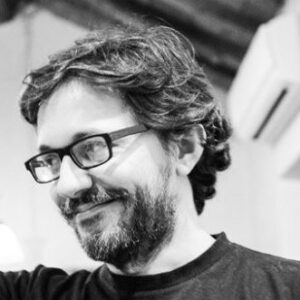
We interviewed Massimiliano Reggi, President of GRT, who told us about the common thread linking all the organization’s activities and areas of work.
Read on!
What activities is GRT currently involved in?
In Somalia, we continue our commitment to supporting the mental health sector by assisting the Forlanini Psychiatric Hospital in Mogadishu. Our activities include on-site and remote training, as well as support for the procurement and use of medication, in coordination with the Somali Ministry of Health.
In Kenya, we are carrying out three initiatives in very different areas of the country, continuing a decade-long, wide-ranging commitment:
-
In Narok County, in Maasai land, we are implementing a three-year project in collaboration with the Italian Agency for Development Cooperation, aimed at preventing gender-based violence and promoting sexual and reproductive health education for adolescents and women. The project includes school-based activities, training, and support for anti-violence centers, including one currently under construction.
-
Along the border with Ethiopia, we are about to launch a new intervention integrating food security, training for local staff, and child protection, with a particular focus on vulnerable families seeking to build paths toward self-sufficiency.
-
In Nairobi, our work with street children continues: we provide rehabilitation pathways, school and family reintegration, family training, and support for the creation of income-generating activities.
In Italy, we are active on several fronts:
-
The School of Specialization in Transcultural Psychotherapy, alongside annual public seminars.
-
The Integrated Transcultural Clinical Center, where psychologists, psychiatrists, anthropologists, and cultural mediators work together. We welcome both private clients and individuals referred by public services or other local organizations.
-
We offer transcultural training for service providers and clinical supervision for teams from other organizations.
-
We develop psychosocial support projects for unaccompanied foreign minors and social projects aimed at strengthening social cohesion in peripheral urban areas.
-
Among our various initiatives, I would particularly highlight “Sconfinati”, co-designed with the Municipality of Milan in collaboration with local services—especially the Ethnopsychiatry Unit of Niguarda Hospital—which focuses on the social care of people experiencing homelessness and psychological distress, often with a migratory background. The project supports them in rebuilding a more stable life, also addressing administrative and housing needs.
What has changed since GRT’s beginnings, and what has remained the same? What has changed?
The world has changed: the social and political context, people’s needs, and the perception of migration. When we began, psychiatric institutions still existed, just to give one example. We brought the pioneering experience of deinstitutionalization into international cooperation, with professionalism but within a context that allowed room for spontaneity; today we operate in an increasingly complex and highly bureaucratized environment.
What has not changed?
Our commitment and attention to others, to diversity, and to building spaces for change together with individuals and local communities have remained the same. Since the 1970s, we have practiced active participation at every stage of our projects. Our commitment to the defense of human rights and the promotion of mental health remains central. We continue to work toward building more cohesive and resilient societies. Training remains a fundamental pillar: we founded the first Italian school of transcultural psychotherapy and continue to offer training programs grounded in experience, effectiveness, and intercultural dialogue, using tools adapted to specific contexts but guided by a shared core of thought—from Via Padova in Milan to the heart of Mogadishu.
Is there a common thread linking all of GRT’s activities?
GRT is committed to the defense of human rights and the promotion of mental health, guided by a vision that informs our work both in Italy and abroad. For us, there is no clear-cut separation between cooperation, training, and clinical intervention: they are all interconnected dimensions of our work. What truly defines our organization is our ability to continuously and coherently foster dialogue between different fields and sectors.
This means, for example, promoting cross-cutting training and self-training moments that involve professionals working in different contexts: educators and psychiatrists working in Somalia engage in dialogue and exchange with those working daily in Italy. This connection is not only theoretical: many of the people we welcome at our Transcultural Clinical Center in Milan come from the very contexts where we operate abroad. We therefore work along the entire migratory pathway—pre-migration, transit, and arrival—fully aware that this path is often non-linear.
The skills we develop across different territories and intervention contexts profoundly enrich our capacity to act: in care provision, treatment, training, and the promotion of individual and collective well-being. This integrated vision is one of the core elements of our work—a common thread that ties together all our activities. Alongside this, another constant defines us: attention to others and to diversity. Our work requires the ability to decenter ourselves, to question our own reference frameworks and models, and to adapt them to the realities we encounter.
It is precisely thanks to the richness and diversity of our activities that we can continue to grow. Everything we do is driven by a shared vision: placing the well-being of people and communities at the center.
How do you see the future of GRT?
I envision a GRT that is increasingly integrated, capable of connecting the expertise of its staff working around the world and engaging with constantly evolving contexts. For us, it is essential to act and reflect within a virtuous cycle of continuous growth and improvement, together with our patients, professionals, members, and communities—both in Italy and abroad. I hope for greater involvement of citizens in our activities. We have always been open to initiatives emerging from local communities, as long as they align with our values, and we offer ideas and expertise to help build communities of practice and shared thought. Along this path, professional training and self-training—as a bottom-up learning process that generates new knowledge and effective responses to ever-changing needs—remain fundamental.


