
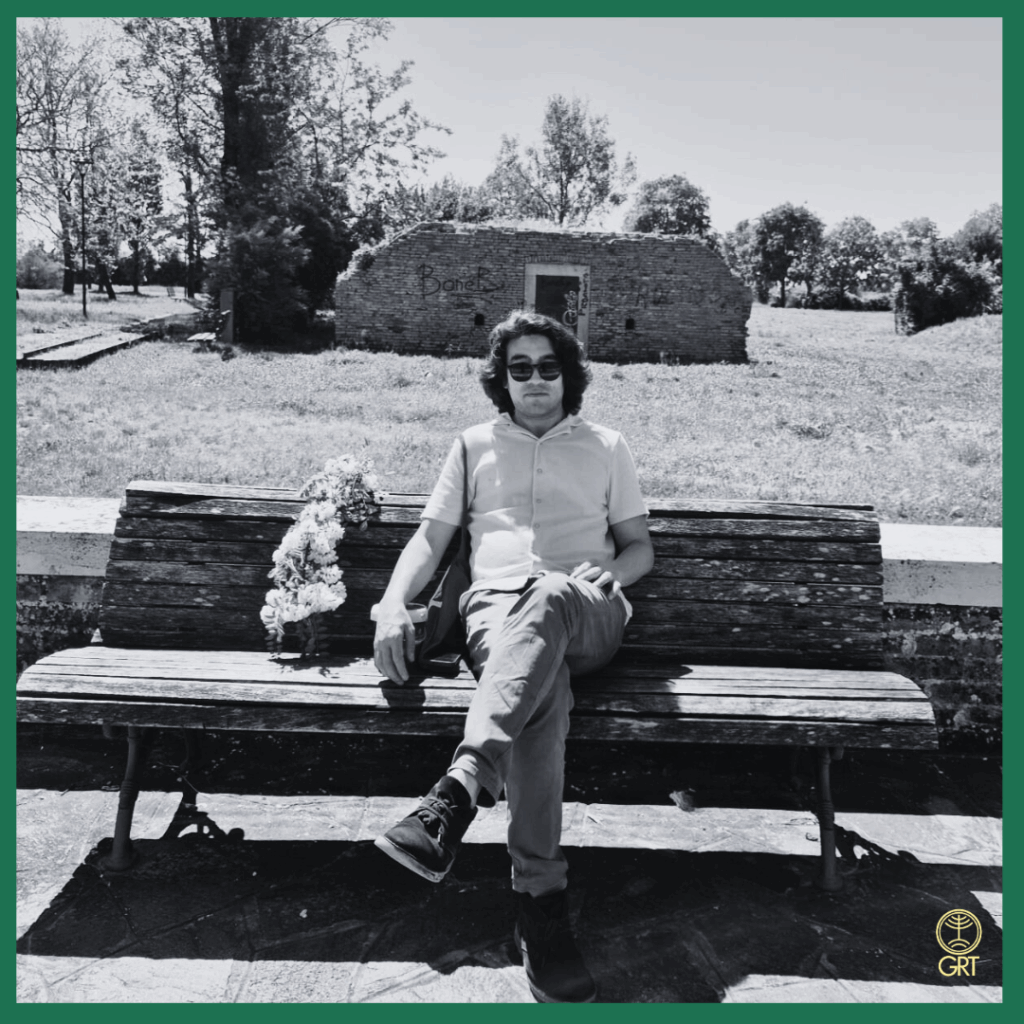
Many worlds in one person
We asked a few questions to Gholam Najafi Fusaro, a cultural mediator and writer of Afghan origin. You can read the interview below!
How did you arrive in Italy?
I arrived clandestinely, following other migrants from Afghanistan to Pakistan, and then from Pakistan to Iran, walking many paths on foot. In Iran, I stayed for about five years, hoping to return to Afghanistan, but I realized that any return would also have to be clandestine. There was also a brief attempt at literacy, but I couldn’t pursue it because I had no documents to enroll in school. After these setbacks and disappointments, I decided to continue my journey in search of a better life, and above all, a place where I could study, as I was hungry for knowledge.
I then traveled to Turkey, walking long distances and crossing mountains on foot and by bus, eventually reaching Istanbul. From there, I tried three times to reach some of the islands of Greece, and from Greece to Venice (Porto Marghera) hidden under a truck, a journey of over three days without food and rarely drinking rainwater. From Greece, I have no memory of where I arrived or departed from, being completely illiterate, but here in Italy I remember my arrival point clearly because I often retrace the streets where I walked my first desperate evening.
How did you learn Italian?
I learned Italian with great effort, driven by a deep sense of necessity, as the language was my only real path forward. I began studying Italian in the community where I was hosted for about two years. I didn’t know how to use a dictionary. In the community, I obtained my middle school diploma without really learning the subjects taught, but that piece of paper helped me later through university specialization.
Learning Italian wasn’t just about studying: I had to distance myself from Afghan peers and had no one to speak my native language with. It was as if I had put my mother tongue on pause. I started making friends with classmates of all nationalities, speaking Italian with everyone. Over the years, I dedicated all my free time to reading—books chosen by my high school literature teacher. Even so, I feel I may never fully master Italian, having started later in life, and after such a long journey, the brain tires and cannot fully rest, living multiple worlds within one person.
Do you remember when you realized you could communicate independently?
I realized I could communicate independently about a year after leaving the community, after three years in total. I understood that I had to take a “leap of faith,” because there were no operators to accompany me to the police station, hospital, etc., and I couldn’t afford a translator. As the saying goes: until you jump in the water, you don’t learn to swim. Without the ability to communicate, I felt blind. Gradually, I began “stealing” new words from people’s mouths, keeping my eyes and ears wide open.
When did you decide to become a mediator?
I decided to become a mediator after writing my third book. I wanted to hear the stories of new arrivals and understand whether clandestine journeys had changed or improved. I wanted to know the motivations behind these journeys, having already made 4–5 trips to Afghanistan myself.
Personally, it was an incredibly rich experience. I keep a diary to process these stories, comparing the illusions people depart with to the extreme disappointments they often face, especially for those who still have family in their country. I wanted to try this work after reviewing my own archives—for example, my first residence permit, where mediators had made mistakes, changed, misunderstood, or replaced my name, which varied from Gulam, Golan, Kulam, to the correct current name, Gholam. I corrected myself through my own errors and learned the order required for my work by witnessing the disorder in my own story.
What does it mean to mediate?
For me, mediating means putting myself in the position of the person in front of me. Listening and relistening to those sad and desperate stories brings suffering. A police officer cannot understand because they haven’t experienced hunger, thirst, fear, or loneliness in the woods and at sea. They may understand being separated from family, but not how many years it will take for a clandestine migrant to see their loved ones again.
Having lived it myself, I can empathize with each person. I do this work humbly: I’m not concerned about how much I earn, but I deeply care about hearing these stories, revisiting and reflecting on them as if reading an old book. If I cannot understand their story, it means I haven’t read my own story properly; I adjust my story like a needle on fabric.
Do you remember a particular episode from your work?
I have a terrible memory of a boy I had to accompany to a psychiatric ward. A team of 15 police officers couldn’t restrain him, but I was able to calm him with pleading words and sedatives. Unfortunately, my words only provided a brief, temporary pause.
How would you define the power of language and words?
I would describe it as immense. Having words at the tip of your tongue means being reborn in a new place. Words allow you to learn new things, to carve your own path, help others, and find better opportunities. Knowledge of language freed me from many hardships and, above all, gave me great companionship: the ability to read, to immerse myself in stories, and to share my own story with others.


